
Unlock Your Inner Peacemaker by Accessing Your Calm Self

Unlock Your Inner Peacemaker by Accessing Your Calm Self © 2024 by Cherolyn Knapp, B.Comm, LLB.B, Q.Med We’ve all experienced those moments when emotions take over. Our heart races, our mind clouds, and we react intensely. Whether it’s a heated argument with a loved one or a stressful work situation, unmanaged emotions can hinder our ability to solve problems and lead to damaged relationships. Managing emotions is one of the 4 Big Skills™ taught in all of the High Conflict Institute’s New Ways training courses. This is because when human beings feel threatened and emotionally overwhelmed, our ability to think clearly and communicate effectively goes down. It’s like our brain is foggy, and we’re more likely to react impulsively or shut down entirely instead of responding thoughtfully. This can lead to hurt feelings, escalation of conflict and polarization. When we’re calm and composed, we are capable of approaching problems with a clear head and building solutions that work for everyone. Even when we see things quite differently, being in a calm state gives us access to our complex problem-solving and collaboration abilities for solving difficult issues. What Does Managing Emotions Mean? Emotional regulation isn’t about suppressing our feelings or pretending everything’s always okay. It’s normal and healthy for people to feel a diverse range of emotions. Managing emotions is about learning to understand and feel our emotions in a healthy way. In this way, we can make decisions about what emotions to act upon and what emotions to put to set aside, rather than reacting impulsively. In New Ways for Work® Coaching Manual, Bill Eddy and L. Georgi DiStefano write that there is a popular belief that upset emotions have to be vented one way or another. They say some people will claim that this means keeping feelings “bottled up inside” and they can’t tolerate how that feels. But how we think can significantly influence how we feel. Therefore we can all generally reduce how upset we feel inside more by changing our thinking than by venting our feelings. Practical Tips for Managing Emotions During the New Ways for Work® Coaching course I lead, we talk about coaching people in workplaces to improve their flexible thinking skills. I asked HCI’s high conflict experts to share their favorite techniques for encouraging flexible thinking to share in an article and here’s what they said: CalmB4Think: Two-step approach Everyone can benefit from developing their own strategies for managing emotions over the long term and in difficult moments. Here are some techniques for helping to remain or restore your equilibrium. Take a break: If it’s appropriate, step away from the situation and take a walk or do something you enjoy. Sometimes this means being direct and saying “I need to take 5 minutes for a reset” or “you’ve given me a lot to think about, let’s come back to this tomorrow.” Other times it might mean making up an excuse to exit a situation gracefully, like “I need to step out to the washroom for a minute” or “I’d like to keep talking, but I have to get to another commitment.” Slow down your breathing: Deep, slow breaths can help calm your body and mind. Ground yourself with your 5 senses: Pay attention to what you see, hear, smell, taste, and feel. This can help you stay present and focused. Positive self-talk: Encourage yourself with kind and supportive words such as “Even though this feels difficult, I am going to be okay” or “I have good problem-solving skills and I can handle this if I’m able to stay in a calm mindset.” Fidget with a stress reliever: A small object like a fidget spinner or a stress ball can help you channel your energy. Talk to someone who is not involved: Speaking with someone who is not involved and doesn’t automatically agree with your point of view or take sides will often help calm you down until you can think more clearly. Practice Mindfulness: Regular mindfulness practices like meditation, yoga, breath work or journaling can help you develop skills for accessing a calm state more readily. Managing emotions is a skill that takes time and practice. By incorporating strategies into our day to day interactions, we can develop that skill to use when we have really challenging interactions with other people. Working on ways to remain in or return to a “calm self” mode gives us access to parts of our brains that can handle very complex and innovative problem-solving, rather than acting without thinking. Do you want to develop your skills for dealing with high conflict behavior? Cherolyn Knapp teaches the New Ways for Work® – Coaching and New Ways for Work® – Leaders courses at HCI. These courses are developed specifically to teach 1:1 coaching and leadership skills to work with employees on improving team functioning. Megan Hunter leads Conflict Influencer™, a 6 week course where you can spend 90 minutes each week on developing your skills. Whether you think you’re involved with someone with high conflict behaviors or you think you might have some high conflict behaviors, this class will help you. Explore HCI’s many other on-demand and online live-stream courses here. Cherolyn Knapp, B.Comm, LL.B, Q.Med is a conflict resolution consultant, mediator, trainer, workplace investigator, and lawyer based in Victoria, Canada. She holds a B.Comm (Human Resources) from Toronto Metropolitan University and an LL.B. from the University of Ottawa. Cherolyn began teaching HCI’s techniques in 2020, and she now brings a thorough knowledge of high conflict personality traits and resolution strategies to HCI’s trainings. Cherolyn is the New Ways for Work® instructor for HCI.
New Ways for Work®Leaders Course Delivers Immediate Impact

New Ways For Work® – Leaders Course Delivers Immediate Impact © 2024 by Cherolyn Knapp, B.Comm, LLB.B, Q.Med I had the pleasure of piloting HCI’s brand new course, New Ways for Work® – Leaders, to 24 keen learners on two half-days in July 2024. The inaugural class was comprised of Canadian and American leaders from across various sectors, including elementary and post-secondary education, municipal government, healthcare, aviation, industrial processing, court services, and leadership coaching. After teaching the New Ways For Work® – Coaching course for HCI since 2022, it had become apparent that there was also a strong need for a course especially for leaders and the challenges they are facing in today’s workplaces. It’s a privilege to have worked with Bill Eddy and Megan Hunter to develop this course and provide information to leaders in a way that they can implement right away with teams that have become derailed by high conflict. Bill Eddy and Megan Hunter kicked the Leaders course off with personal introductions which highlighted the prevalence of high conflict behavior in organizations and the importance of leaders learning skills for managing these challenging behaviours safely and with empathy. 4 Defining High-Conflict Characteristics The leaders learned the four defining characteristics of high conflict personalities and what to avoid doing when high conflict behavior is identified. They also learned what to do instead, using the four building blocks of the CARS Method®. We then delved into six key leadership areas where leaders make missteps and explored how to adapt their leadership. From day-to-day interactions to toxic group behavior to performance management and formal processes, the leaders learned frameworks and practiced skills for interacting compassionately while also setting clear expectations and limits with the most difficult employees. I’ll level with you that developing and delivering a brand new course for HCI, when at heart I still just feel like part of the “Bill and Megan Fan Club,” activated that voice in my head that worried, “what if it isn’t good enough?” The beauty of starting with a pilot version was being able to check in with attendees on how the various topics were landing. I made lots of notes about adjustments to make to improve the flow and allow more time when needed. I was elated on the second day when everyone showed up for more and knew we must be getting something right. This group of highly engaged leaders shared feedback about key insights that had been resonating with them and how they had already begun implementing some of the skills. Here are some of the insights that the leaders in the course said they had gained: Remaining calm and not getting sucked into the vortex of high conflict behavior Acronyms like CARS, EAR, BIFF, SLIC and other frameworks make it easier to remember what to do The importance of reframing to navigate one interaction at a time and put aside attempts to lead to insight Setting limits is often not easy and takes practice Thank you again to those who attended the first course and provided your feedback. I am passionate about empowering leaders everywhere with tools to navigate challenging employee dynamics and hope to meet you at upcoming New Ways for Work® courses. Who should take New Ways For Work® – Leaders? This course is for managers, supervisors, directors, chairpersons, leadership consultants and any leader who works in corporate, small business, government, public or non-profit sectors. If you lead people, this course will help you navigate and minimize the disruption high conflict personalities cause to your work teams. Time commitment: 2 half-days live online training with Cherolyn Knapp + optional on-demand videos with Bill Eddy Frequency: approximately every 2 months at various times of day for leaders in time zones anywhere. Register for sessions coming up in September or November 2024. Who should take New Ways for Work® – Coaching? This course is for executive coaches, human resources partners, Employee Assistance Program (EAP) Service Providers, counsellors, therapists, union representatives, respectful workplace advisors, wellness advisors, and anyone who works one-on-one with employees in a coaching role to learn two coaching techniques: CARS Method® Coaching: to help anyone deal with someone else’s difficult behavior, organize their responses to respond to calm down upset people, to redirect their energies, and to focus them on positive future choices and consequences; and New Ways for Work® Coaching: structured exercises for an employee who displays high conflict behavior to strengthen the 4 Big Skills™: flexible thinking, managed emotions, moderate behaviors and checking oneself. Time commitment: 120 minutes of foundational pre-recorded videos with Bill Eddy + 2 half-days live online training with Cherolyn Knapp Frequency: approximately twice per year. Register for sessions coming up in October 2024. Cherolyn Knapp, B.Comm, LL.B, Q.Med is a conflict resolution consultant, mediator, trainer, workplace investigator, and lawyer based in Victoria, Canada. She holds a B.Comm (Human Resources) from Toronto Metropolitan University and an LL.B. from the University of Ottawa. Cherolyn began teaching HCI’s techniques in 2020, and she now brings a thorough knowledge of high conflict personality traits and resolution strategies to HCI’s trainings. Cherolyn is the New Ways for Work® instructor for HCI.
How to Build a Team: 7 Relationship Skills for Managers
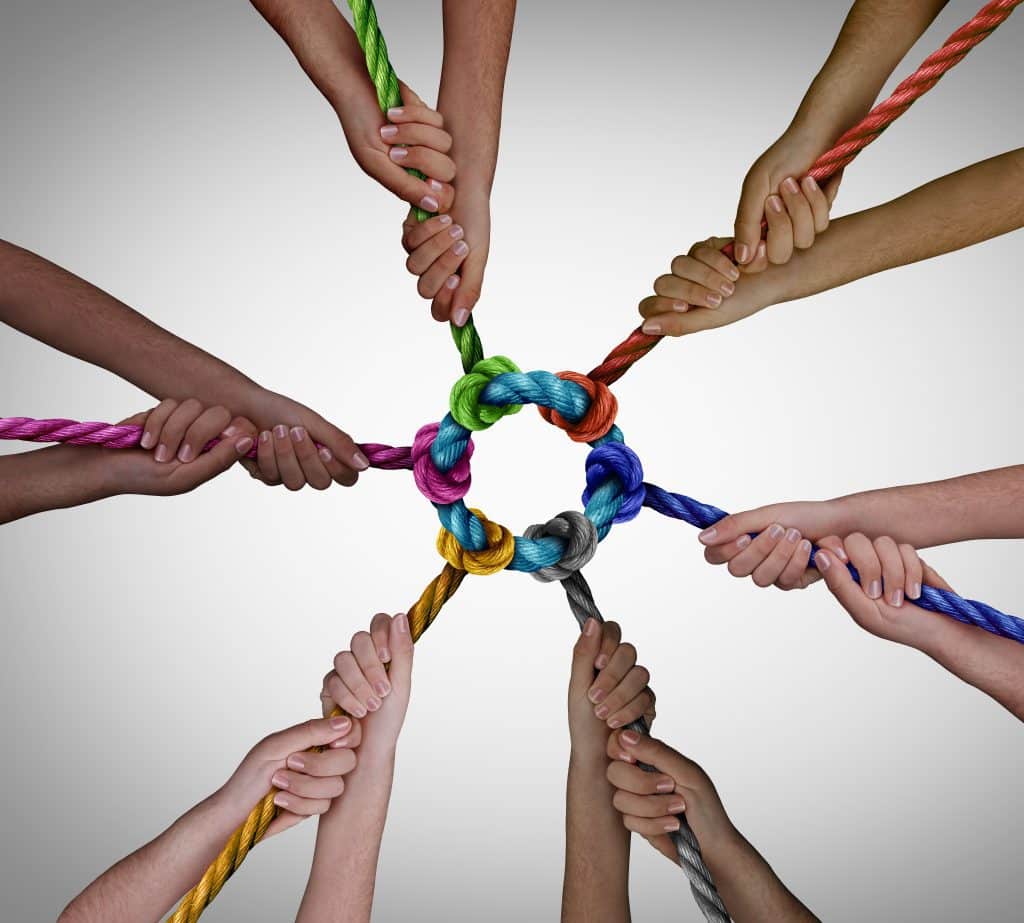
How to Build a Team 7 Relationship Skills for Managers and Other Leaders © 2024 by Bill Eddy, LCSW, Esq. In today’s world, building and strengthening a team in the workplace has become one of the most important skills for managers. Employees demand more involvement in innovation and decision-making, and more opportunities for personal growth. Pressures from above and outside the organization are increasingly common. Managers can be pulled in many different directions, often preoccupied with putting out fires and managing high-conflict situations. Yet there is also nothing more satisfying than having a strong team that you look forward to working with each day for everyone involved. Such a team can provide resilience for the manager and everyone else on the team. This is especially true today as many people look for a sense of community, identity, and purpose through their work. This goes for those in business, nonprofit organizations, social and recreational groups, religious and political organizations, and many other group settings. Seven relationship skills that managers and other leaders at all levels can practice and teach to strengthen their teams. 1. Unifying Purpose Having a simple and clear mission statement and referring to it regularly can help everyone on the team feel a sense of togetherness. In today’s world, we are more segmented, isolated and lonely than perhaps ever before in history. Yet the people we work with—even with remote work—can provide us with positive feedback, a sense of shared success and even joy in accomplishing certain tasks, and a future to look forward to as we work toward our collective goals. We are social beings, and nothing can replace this sense of working as a team for a greater good. To accomplish this, managers can regularly discuss the mission of the team and how progress is being made. They can also regularly praise the team for its accomplishments, have frequent team meetings and fun team-building events. Even team T-shirts and hats can build a sense of unity, especially in today’s world where team members can look very different from each other. While some individual team members may succeed at individual tasks and be rewarded for it, it helps to remember that everyone on the team needs to feel valued and important. (The saying “public praise and private criticism” applies here.) Too much emphasis on individual success can undermine the sense of teamwork and drive unhealthy internal competition. Rewarding the whole team for meeting team goals is just as important. The main idea is to find the right balance between emphasis on the individual and the group. Note: Skills 2-5 below are known as the CARS Method®, which High Conflict Institute has been teaching for over fifteen years as a way to manage and reduce high-conflict situations. 2. Connecting with Empathy, Attention, and Respect Connecting with each team member is one of the greatest ways of building a strong team in which each person feels valued, which strengthens commitment to the team. It just takes a moment to give an EAR Statement™ because they are usually just a sentence or two that expresses empathy, attention, and/or respect to the other person. A manager can accomplish this by regularly giving statements such as the following: “I can see/hear how important this is to you.” Or: “I can understand how frustrating this is.” (These show Empathy) “I want to understand. I’ll pay attention. Tell me more.” (Attention) “I have a lot of respect for your work/effort/commitment on this project.” (Respect) These are just a few examples. EAR statements can really help when someone is very upset or angry and needs help in calming down. Rather than criticizing the person and creating emotional distance, EAR statements move quickly into connecting with the person so that you can focus on problem-solving—together. (For more on this skill, see the book Calming Upset People with EAR.) 3. Analyzing Options Solving workplace problems doesn’t have to take a lot of time. Managers often get hijacked from their plans by the many problems that employees bring to them. A good approach is to inform all employees from the start that they should always bring a proposed solution when they present a problem. This way the focus is on the solution, rather than the problem (and emotions about the problem). Getting employees to think about solutions makes a lot of sense because they usually are closer to the problems and understand them better than the manager. Rather than having the manager research the problem and try to solve it, turn it into a joint effort of the employee and the manager. To accomplish this, the manager can say “What’s your proposed solution to this problem.” Or: “Tell me your thoughts about what we can do about this.” This values the knowledge and creativity of the team member. If it’s not realistic to ask the employee for a proposal, then the manager can still offer two or three choices for solutions to the problem and have the employee participate in choosing the best. This way the employee shares the task and responsibility of decision-making and problem-solving. (For more on this skill, see the book So, What’s Your Proposal? Shifting High Conflict People from Blaming to Problem-Solving in 30 Seconds.) 4. Responding to Hostility or Misinformation From time to time, there may be someone inside or outside the team who communicates with hostility, most likely in writing. (Hostility in person can often be calmed with an EAR statement.) While it is tempting to respond to a hostile email or text with similar words and tone, this is unhelpful and unnecessary. Instead, a response that is brief, informative, friendly, and firm (a BIFF Response®) can usually calm the hostility or correct any misinformation. This helps avoid the back-and-forth of insults which tends to grow and create polarization in teams. Managers should learn to use this easy skill and can share it with everyone on the team. (High Conflict Institute trainers frequently teach BIFF communications to whole teams and also