
How to Build a Team: 7 Relationship Skills for Managers
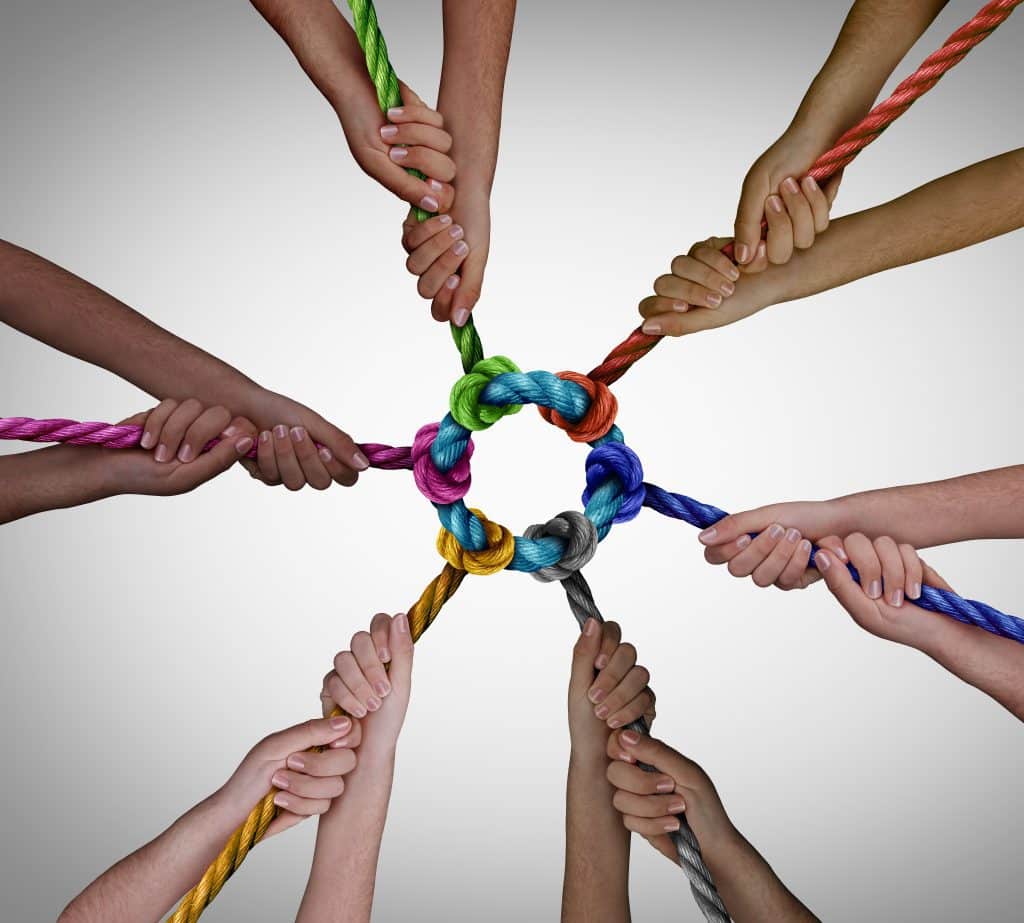
How to Build a Team 7 Relationship Skills for Managers and Other Leaders © 2024 by Bill Eddy, LCSW, Esq. In today’s world, building and strengthening a team in the workplace has become one of the most important skills for managers. Employees demand more involvement in innovation and decision-making, and more opportunities for personal growth. Pressures from above and outside the organization are increasingly common. Managers can be pulled in many different directions, often preoccupied with putting out fires and managing high-conflict situations. Yet there is also nothing more satisfying than having a strong team that you look forward to working with each day for everyone involved. Such a team can provide resilience for the manager and everyone else on the team. This is especially true today as many people look for a sense of community, identity, and purpose through their work. This goes for those in business, nonprofit organizations, social and recreational groups, religious and political organizations, and many other group settings. Seven relationship skills that managers and other leaders at all levels can practice and teach to strengthen their teams. 1. Unifying Purpose Having a simple and clear mission statement and referring to it regularly can help everyone on the team feel a sense of togetherness. In today’s world, we are more segmented, isolated and lonely than perhaps ever before in history. Yet the people we work with—even with remote work—can provide us with positive feedback, a sense of shared success and even joy in accomplishing certain tasks, and a future to look forward to as we work toward our collective goals. We are social beings, and nothing can replace this sense of working as a team for a greater good. To accomplish this, managers can regularly discuss the mission of the team and how progress is being made. They can also regularly praise the team for its accomplishments, have frequent team meetings and fun team-building events. Even team T-shirts and hats can build a sense of unity, especially in today’s world where team members can look very different from each other. While some individual team members may succeed at individual tasks and be rewarded for it, it helps to remember that everyone on the team needs to feel valued and important. (The saying “public praise and private criticism” applies here.) Too much emphasis on individual success can undermine the sense of teamwork and drive unhealthy internal competition. Rewarding the whole team for meeting team goals is just as important. The main idea is to find the right balance between emphasis on the individual and the group. Note: Skills 2-5 below are known as the CARS Method®, which High Conflict Institute has been teaching for over fifteen years as a way to manage and reduce high-conflict situations. 2. Connecting with Empathy, Attention, and Respect Connecting with each team member is one of the greatest ways of building a strong team in which each person feels valued, which strengthens commitment to the team. It just takes a moment to give an EAR Statement™ because they are usually just a sentence or two that expresses empathy, attention, and/or respect to the other person. A manager can accomplish this by regularly giving statements such as the following: “I can see/hear how important this is to you.” Or: “I can understand how frustrating this is.” (These show Empathy) “I want to understand. I’ll pay attention. Tell me more.” (Attention) “I have a lot of respect for your work/effort/commitment on this project.” (Respect) These are just a few examples. EAR statements can really help when someone is very upset or angry and needs help in calming down. Rather than criticizing the person and creating emotional distance, EAR statements move quickly into connecting with the person so that you can focus on problem-solving—together. (For more on this skill, see the book Calming Upset People with EAR.) 3. Analyzing Options Solving workplace problems doesn’t have to take a lot of time. Managers often get hijacked from their plans by the many problems that employees bring to them. A good approach is to inform all employees from the start that they should always bring a proposed solution when they present a problem. This way the focus is on the solution, rather than the problem (and emotions about the problem). Getting employees to think about solutions makes a lot of sense because they usually are closer to the problems and understand them better than the manager. Rather than having the manager research the problem and try to solve it, turn it into a joint effort of the employee and the manager. To accomplish this, the manager can say “What’s your proposed solution to this problem.” Or: “Tell me your thoughts about what we can do about this.” This values the knowledge and creativity of the team member. If it’s not realistic to ask the employee for a proposal, then the manager can still offer two or three choices for solutions to the problem and have the employee participate in choosing the best. This way the employee shares the task and responsibility of decision-making and problem-solving. (For more on this skill, see the book So, What’s Your Proposal? Shifting High Conflict People from Blaming to Problem-Solving in 30 Seconds.) 4. Responding to Hostility or Misinformation From time to time, there may be someone inside or outside the team who communicates with hostility, most likely in writing. (Hostility in person can often be calmed with an EAR statement.) While it is tempting to respond to a hostile email or text with similar words and tone, this is unhelpful and unnecessary. Instead, a response that is brief, informative, friendly, and firm (a BIFF Response®) can usually calm the hostility or correct any misinformation. This helps avoid the back-and-forth of insults which tends to grow and create polarization in teams. Managers should learn to use this easy skill and can share it with everyone on the team. (High Conflict Institute trainers frequently teach BIFF communications to whole teams and also
Is Total Freedom the Goal?

Setting Boundaries: Is Total Freedom the Goal? © 2024 by Bill Eddy, LCSW, Esq. Setting Boundaries in Relationships at Home, at Work and Online As we celebrate Independence Day and the freedoms that we enjoy, the question of “how free can we be and still get along” keeps coming up. This applies to relationships in families, at work, the online world, and politics. While there is a lot of talk of freedoms and rights, there also has to be talk of boundaries and responsibilities. One thing is clear: Where there are no rules, only bullies will rule. Unfortunately, boundaries in today’s world can be very fuzzy and often need open discussion. In years past, roles were clear and everyone knew what the basic boundaries were. Today, boundaries are more subject to negotiation, so people need skills to assert themselves enough to feel safe while also feeling free as much as possible to grow and be themselves. This article addresses setting boundaries in various settings and how we can do that with confidence and mutual respect. Romantic Relationships It used to be obvious that romantic relationships only work when people mutually agree that they won’t date other people once they have committed to a partner. Yet this isn’t always clear-cut today. Some people have “open marriages,” in which they date other people. Nowadays, some people are “polyamorous,” which means they each may have two or three people who are ongoing “part-time lovers.” There is also the “Big Love” of a polygamous family with one man and several wives and all of their children. Then there are some people with narcissistic personalities who believe that they need to go out and get more love from several people, while their partners should stay home and only need them. Overall, this means that people need to be clear about what their needs and expectations are and need to say them out loud at some point when developing a romantic relationship. It also means that people need to know themselves and their own needs before taking big relationship risks. Multiple partners often turn out to be fantasies that can’t be sustained and sometimes people get hurt deeply. On the other hand, research shows that young adults today are avoiding sex, marriage, and children more than prior generations, which isn’t good either. Assertive skills can help make the world and relationships less scary, as explained below. Young Adults (and High School) Sex Young people have to navigate a far different world today from their parents and grandparents. While no sex before marriage was the standard decades ago, the issue of sex comes up early in dating or “hooking up” without even a dating relationship. Unlike in the past, young people have to learn to protect themselves because the culture, religious communities, peers, and even families are less involved in these very individualized decisions today. Two key boundaries seem important here: Know what you want and don’t want. These are boundaries for yourself. If someone doesn’t want what you want or doesn’t respect what you don’t want, then they aren’t for you. High school and college students should never feel so desperate for love that they sacrifice their sense of self, what they want, and what they don’t want. They still have lots of time to find what they are looking for in today’s wide-open world. Finding like-minded groups of people who share beliefs and interests is one of the best ways to meet people who will respect you. Say what you want and don’t want. Only “Yes means Yes!” It used to be that you could do whatever you wanted with a partner unless they said No! (the old “No means No!”) But that turned out to be insufficient because people (often girls) felt pressured to do things they didn’t want to and they didn’t feel comfortable saying No. Instead, “Yes means Yes” means that you have to get permission first before you engage in each form of physical contact. Without a Yes, there is an automatic boundary. The problem is that not everyone knows this or follows it, so you have to be ready to be very assertive about saying “Only Yes means Yes!” Abusive Relationships Unfortunately, some relationships include physical (and sometimes sexual) violence. This catches many people (primarily women) off-guard and they come to believe that this is a part of most relationships—but it’s not. All partners should respect each other’s health and safety, and domestic violence is a violation of one person’s body for another person’s freedom to abuse. In today’s society, there is a generally accepted boundary against domestic violence (it’s illegal), but it still occurs in approximately 20% of couple relationships, with perhaps half of them including what is called “coercive control,” in which one partner lives in fear of the other partner. Early in a relationship look for warning signs and even discuss agreed boundaries against all of these behaviors and more: no slapping, hitting, pushing, shoving, knocking down, blocking from leaving, taking a phone away, choking, cutting off from friends and relatives, controlling finances, etc. If you can’t discuss this and agree to such boundaries, then the relationship may already be unsafe. Divorce and Parenting This is an area where all the rules are changing in terms of roles, parenting time, and responsibilities when a relationship ends, but the parents continue on as business partners in the business of raising their children. For a detailed description of relevant boundaries, see the article “Top 12 Tips for Co-Parent Boundaries” in the May 2024 High Conflict Institute newsletter. Workplace Rules Boundaries in the workplace can be particularly confusing nowadays, especially with dramatic changes within companies, with employees and managers coming and going regularly, and with both genders working closely side-by-side. Much of today’s work world needs to be negotiated, so assertiveness skills are critical. From the start of employment, companies and employees should feel free to itemize what the expectations, behaviors, and responsibilities are for everyone. It helps if
How Adult Bullies Find and Encourage Each Other on Social Media

How Adult Bullies Find and Encourage Each Other on Social Media © 2024 by Bill Eddy, LCSW, Esq. Adult bullies have traditionally been kept on the fringes of society by families, communities, and legal systems that won’t tolerate their bullying behavior, as I explain in my new book Our New World of Adult Bullies: How to Spot Them – How to Stop Them. However, with the advent of social media, they are finding like-minded bullies and encouraging each other in their negative behavior rather than encouraging each other to use more positive behavior. This article addresses three ways in which I see this happening. Dysfunctional Interpersonal Behavior of Bullies As I describe in the book, most adult bullies appear to have traits of three personality disorders: narcissistic, antisocial, and borderline. This means that many of them have dysfunctional interpersonal behavior with tendencies toward being domineering, vindictive, and intrusive. (Wilson, et al, 2017) In the past, most of these potential bullies would have learned that their bullying behavior is undesirable and, in most cases, unacceptable. They may have received consequences for their behavior that made them try to restrain themselves to the extent possible. Social media has changed all of this. Now isolated bullies have found other people who share their interpersonal dysfunction and formed a sense of community around it. Rather than supporting each other in a process of positive behavior change, such as Alcoholics Anonymous and Narcotics Anonymous, some are supporting each other in defending and justifying their undesirable behavior instead. For example, author and psychotherapist Alexander Kriss believes that many people with borderline personality disorder can improve and that the diagnosis itself is unhelpful. He is particularly concerned that online communities are forming and reinforcing the negative behaviors of the disorder. For example: Such communities, Kriss fears, can “pervert” B.P.D. into a self-serving justification for misconduct. He cites the musician Abby Weems’s posts about her relationship with the podcaster Dustin Marshall: “He made it so easy to rationalize his behavior, telling me ‘that’s just what happens when someone has BPD.’ His personality disorder made up so much of his identity that any abusive behavior fell under the umbrella of his condition. (Singh, 2024, 24) Of course, this is not to say that all people with a diagnosis or self-diagnosis of borderline personality disorder behave this way. There are many who are working hard at recovering from this disorder, including treatment groups such as those using the skills of DBT (Dialectical Behavior Therapy). (Dimeff & Koerner, 2007) Political Polarization and Bullies One of the big concerns around the world today is: Why are we so polarized politically? The same media and social media dynamic appears to be taking place. Traditionally, political power was something that grew by building relationships with many differing people who were able to agree on enough shared values and policies to hold themselves together. There is a pro-social element to such political power. It is built around the middle ground that brings the most people together. This has been the nature of political parties around the world—in the past. Today, through the influence of high-emotion mainstream media—which constantly promotes conflict, crises, chaos, and fear—everyone is more anxious and open to more extreme policies and more extreme groups. As I explain in my book, when people in polarized groups just talk to themselves they become more extreme, not less. Social media enables groups of extreme and anxious people to find each other and join together and strengthen their extreme thinking. So, in a two-party system, such as in the U. S., the parties used to be center-left (Democratic) and center-right (Republican) in order to get anything done. With social media, they are pulled farther and farther apart by the most aggressive people and get very little done beyond getting attention and reinforcing each other’s extreme thinking and behavior. This is happening worldwide. The extreme groups are getting more attention in the high-emotion media—mostly mainstream media and social media—because bullies have the most emotional personalities and the biggest drive to get attention. These social connections legitimize their behavior as ordinary and necessary politics, with bullies as “ordinary” leaders. The result is that the more extreme players can form the strongest bonds with each other and are able to energize each other as they promote more and more extreme values and positions. Politics has become a process of finding your support group in extreme opposition to others rather than finding your support group in agreement with others who may disagree on a lot but are willing to work together on a larger common agenda. Mass Shootings I used to think that individuals who committed mass shootings (three or more deaths) were lone wolves, isolated from society. Recently, however, those who study such shootings say the shooters tend to be between the ages of 18 and 21 and belong to social media groups. Apparently, they encourage each other. As one researcher said: “These are young guys who feel like losers, and they have an overwhelming drive to show everybody they are not on the bottom,” he said. “In the case of the Buffalo shooter, it was about trying to impress this community of racists he had cultivated online. In the case of the kid in Uvalde, it was about going back to the place where you felt disrespected and acting out violently.” (Thrush & Richtel, 2022) While it is hard to believe, such behavior seems to have a social purpose in the distorted thinking of the shooter. When such young adults connect with other like-minded young adults, the potential for danger can be very high. Peer pressure and the drive to belong are very powerful at this age. Ideally, they would have pro-social activities to engage them and give them a positive sense of community and purpose. Unfortunately, when left on their own to fill their time exploring the internet, their social needs may get met by social media of the most negative type. Conclusion Social media is