
Students Should Learn They’re NOT Special!

© 2013 By Bill Eddy, LCSW, Esq. Each year I teach a 2-weekend course at Pepperdine University’s School of Law at their Strauss Institute for Dispute Resolution. It’s a chance for really great discussions with only 26 students about the Psychology of Conflict, with an emphasis on learning how to manage potentially high-conflict clients, opposing parties and opposing counsel. However, there are also students working on Masters in Dispute Resolution, not just law students (although some are working on both!). So we get to talk about personality disorders, high conflict people (HCPs) in legal disputes, in workplace conflict, and in all areas of modern life. One of my favorite discussions arose when we were talking about how high conflict personalities develop and why they are increasing in today’s society. I pointed out how research shows that since about 1970 young people have been raised to believe that they are “special.” Unfortunately, some people who get too much of this message appear to develop narcissistic personality disorder. They are self-absorbed, see themselves as very superior, are arrogant, disdainful and disrespectful toward others. I mentioned that in the book The Narcissism Epidemic, the authors (Jean Twenge and Keith Campbell) point out that since 1970, the self-esteem movement convinced parents and teachers to tell their children “You’re special! You can do anything, be anything and have anything!” This was a great idea, because low-self-esteem can be harmful and a contributor to suicide, crime, drug use, bullying, lower productivity and unnecessary disappointment. However, they forgot to finish their encouraging statement: “You will need to work really really hard and learn the right skills, THEN you MIGHT be able to have a lot, do a lot and be a lot.” In the absence of that message, we have raised a lot of people over the past few decades who are quite frustrated, depressed, anxious and irritable because they don’t know how to get what they want in life. The students in the class really agreed with this idea, as they have had to work very hard to get into law school and now they have to work hard to pass their exams (including mine!). They described knowing people who have some of these traits. Then they said we really should be teaching the opposite lesson, and one mentioned a commencement speech earlier this year that went viral. Essentially, the message growing up today should be: “You’re NOT special! You’re going to be competing with thousands of other students, job applicants, dating partners, entrepreneurs and so on. You’re going to need to work hard, learn lots of skills, and learn how to get along. You’re going to have to accept defeat and recover from it.” The students pointed out how young children are over-protected from failure – they all get stars, awards, a pass, or other win-win feedback. The problem with this is that students don’t learn important lessons from failure: Such as what areas they don’t have skills in, so they can focus on those in which they do. Such as how to recover from failure and keep trying until you succeed. Such as, how to delay gratification for a long time while you learn the skills to get what you want. And so forth. While we had many other discussions of how to manage high conflict clients, parties, employees, managers and partners, this one sticks in my mind for this holiday season. In fact, by the end of class I told them they were a great class – but they’re not special! Perhaps that the most functional compliment you can give people these days! It’s humbling and motivating at the same time. I believe one of the best messages we can give children – and students – is that you are special to me, but you are not special in the world. You’re going to have to work hard, study hard and learn to deal with failure and get back up again. I’ll do my part to help you along the way, but I can’t do it for you. And, even though you’re not special, I’ll still wish you Happy Holidays! Bill Eddy is a lawyer, therapist, and mediator. He is the co-founder and Training Director of the High Conflict Institute, a training and consultation firm that trains professionals to deal with high conflict people and situations. He is the author of several books and methods for handling high conflict personalities and high conflict disputes with the most difficult people.
Workplace Bullying – Against the Law?
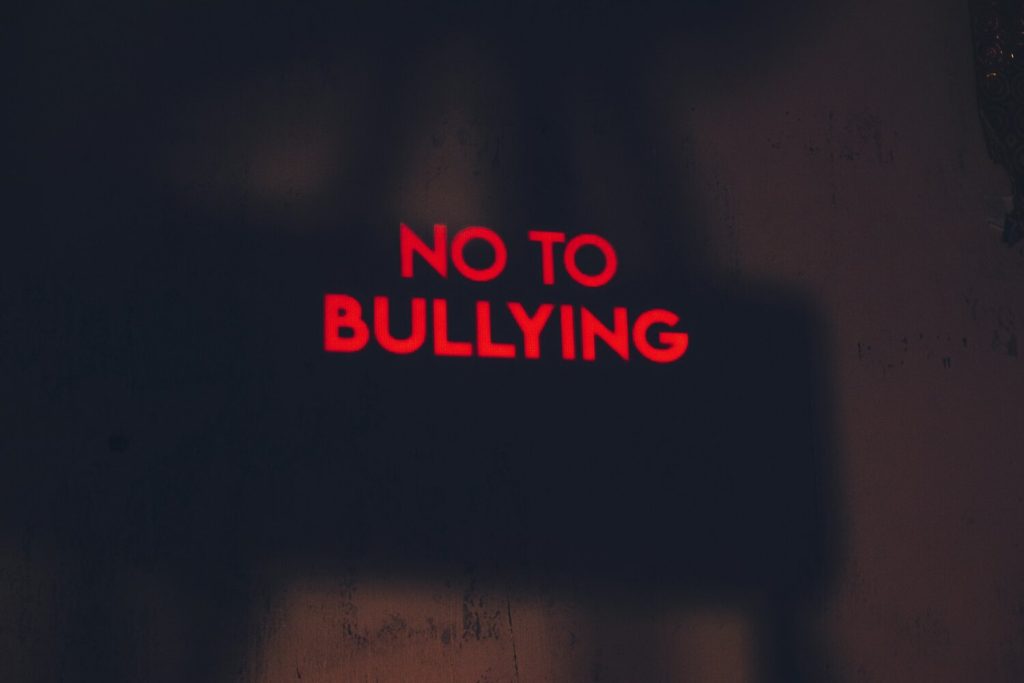
© 2013 By Bill Eddy, LCSW, Esq. When I was recently in Australia, I had the opportunity to give a seminar in Canberra (the nation’s capital) about the dynamics of workplace bullying and high conflict personalities. The program was sponsored by the Institute of Arbitrators and Mediators Australia – Canberra chapter. Workplace Bullying Laws As part of that program, I also spoke on a panel with a lawyer and a regional director of the enforcement agency for their workplace bullying law. In Australia, it is against the law to engage in workplace bullying or to allow it to continue – which is quite different from the United States, where there are no state or federal laws against workplace bullying (yet!). Several states have such bills in their legislatures, but none have passed yet. The Work Health and Safety Act in Australia states that managers can be personally individually fined from $100,000 to $600,000, depending on how serious the offense is. Comcare is the agency in charge of prosecuting those who have violated this tough law. Their regional director explained that companies and individuals cannot insure themselves against such liability. It is a truly personal responsibility and upper level administrators cannot simply claim they didn’t know about bullying – they can be fined if they “should have known.” However, the law is just a few years old, so no one has yet been found responsible for paying such a fine. But they expect a current case that is progressing through the system may be the first with such strong action. Increase in Psychosocial Injuries Apparently, with recent cutbacks in the public sector jobs, there has been an increase in “psychosocial injuries” at work, including bullying and harassment claims. Comcare indicates that such claims are four times higher in the public sector than in the private sector, with a 30 percent increase over the past three years. (The information cited here was reported in the following newspaper article by Noel Towell, Public Service Reporter: Bullying warning for PS managers, The Canberra Times, Sept. 27, 2013.) Since the United States does not yet have anti-bullying laws, it was encouraging to me to see the strong emphasis on “psychosocial” issues in the workplace in Australia. As a social worker, I was trained to understand and recognize the significance of how people relate to each other in families and at work. One thing I learned was that it takes real consequences to motivate change for patterns of bad behavior – not just a lecture from a counselor or a judge. It will be very helpful to see the progress of consequences and what we can learn from the Australian experience. Workplace Bullies and High Conflict Personality A concern of mine with people who have high conflict personalities (HCPs) is that they often feel that they have been abused when in fact they are the abusive person. So I asked the audience, which included several investigators of harassment and bullying claims, what percent they thought were brought by someone who was actually a harasser or bully themselves. The answer I got was that in approximately 40% of cases, they have a strong concern that the person bringing the complaint may be actually harassing or bullying someone else by bringing the complaint. This is about what I expected. It is not an argument for throwing out such laws, but rather an argument for strengthening the laws to include consequences for complaints brought for frivolous or harassing purposes. Since HCPs have many cognitive distortions (for more on this, see my book High Conflict People in Legal Disputes), it is important to maintain a healthy skepticism and truly investigate the facts when anyone claims that someone has abused them. In many cases this is true and there needs to be consequences. But in some cases, these claims are not true and need to have consequences for false statements recklessly made or knowingly false. Eyes wide open need to be the motto when it comes to bullying and any kind of abuse. I learned a lot on this trip and look forward to visiting Australia again next September. BILL EDDY, LCSW, ESQ. is the co-founder and Chief Innovation Officer of the High Conflict Institute in San Diego, California. He pioneered the High Conflict Personality Theory (HCP) and is viewed globally as the leading expert on managing disputes involving people with high-conflict personalities. He has written more than twenty books on the topic, developed methods for managing high-conflict disputes, and has taught professionals in the U.S. and more than ten countries. He is also co-host of the popular podcast, It’s All Your Fault, and writes a popular blog on Psychology Today.
Mediating High Conflict Disputes

© 2013 By Bill Eddy, LCSW, Esq. When I was in Australia a couple weeks ago, one of my seminars focused on a new approach to mediating high conflict disputes – what I call New Ways for Mediation. After speaking to large groups for several days, it was great to have a full day with just 16 mediators and arbitrators with the IAMA of Victoria: Institute of Arbitration and Mediation Australia. It gave me the opportunity to discuss the paradigm shifts of this new approach, and then to give those present some practice exercises to really grasp how it works. Some of the paradigm shifts, which we discussed in depth, include: 1. No storytelling at the start: We don’t want potentially high-conflict parties to start out by telling us how bad the other party has been in the past. Instead, we want their thoughts and questions about solutions to the problems that brought them to mediation. This may include some information about the past, but not much. In other words, “Opening Statements” are discouraged to the extent that they focus on the past, on the other party’s “bad behavior” and efforts to persuade the mediator. With high conflict people, this simply reinforces their negative thinking and builds resistance to problem solving. We replace Opening Statements with “Initial thoughts and questions about possible solutions.” This builds momentum for keeping the focus on the future. 2. More work for the parties: One of the common dynamics of high-conflict people is a negative engagement in the decision-making process: They get others to make their decisions for them (judges, arbitrators and even mediators sometimes), then they criticize and undermine those decisions. So in New Ways for Mediation, we put the emphasis on four simple skills for the parties to use to be more engaged in a positive way and we reinforce these skills over and over again: Asking Questions, Putting Issues on the Agenda, Making Their Proposals and Making Their Decisions. The emphasis is on making proposals. When they have a complaint about the other party, they are reminded to turn it into a proposal. When they criticize the other party, we ask them if it is a question or a proposal that they are trying to raise. By keeping them focused on these four simple skills, they work harder than high conflict clients usually do, when they blame and put responsibility on everyone else. Of course, this takes practice and patience on the part of the mediator. While it’s tempting to focus on asking clients many brilliant questions, it’s really better with potentially high-conflict people to take their energy and help them turn it into asking questions and making proposals themselves. 3. Less stress for the mediator: In order to help the parties work harder at this positive engagement, the role of the mediator needs to be more of a guide than dispute resolver. The mediator helps the parties resolve their own dispute – which is the standard idea of mediation. However, with high-conflict parties, it’s very tempting to suddenly work harder, asking them lots of questions, asking if the parties “can agree” to this idea or that, and trying to persuade them to be reasonable. Instead, in New Ways for Mediation, the mediator keeps putting it back on the parties’ shoulders, asking: “How would you respond to his/her proposal? Would that be a Yes, a No or I’ll think about it?” The mediator spends a lot of time educating the parties about their choices, what others have done and the consequences of each choice. But then doesn’t try to push the parties as much as guide them to making proposals, ask questions about proposals, gather information and make new proposals – until there is an agreement. The mediators in Melbourne were very experienced, so that they had a lot of good questions, shared helpful experiences, and enjoyed shifting some of their efforts during the practice exercises. Overall, it was a very enjoyable and gratifying experience for me – and a nice way for me to spend my last day in Melbourne. Bill Eddy is a lawyer, therapist, and mediator. He is the co-founder and Training Director of the High Conflict Institute, a training and consultation firm that trains professionals to deal with high conflict people and situations. He is the author of several books and methods for handling high conflict personalities and high conflict disputes with the most difficult people.